-
DestinationRomagna
-
ProvinceForlì-Cesena
-
Distance from CapitalForlì 32 km - Cesena 40 km
-
Index
Civitella di Romagna lies about 30 kilometers from Forlì, elegantly situated on the right bank of the Ronco-Bidente River and sheltered by the Girone hill.
Its appearance as a walled village, already known before the year 1000, reveals a medieval spirit that remains intact, where imposing bastioned walls embrace a historic center dominated by the ruins of the ancient fortress.
The undisputed symbol of the town is the tower, skillfully rebuilt in the Gothic style, which houses a historic clock dating back to 1842.
Every corner of this town center, whose name derives from the Latin Civitatula (small city), tells of a past that began with Celtic settlements and continued through the Roman era and Byzantine influences, eventually becoming a fiefdom contested between the Papal States and the great families of Romagna, such as the Malatesta.
When to go and what to see
Places to visit are the splendid Sanctuary of the Beata Vergine della Suasia, built in the second half of the 1500s and the ancient castle that rises on a spur of rock to dominate the whole valley, of which few remains: the tower, rebuilt in Gothic style, with the clock of 1842.
The medieval urban structure of the village, surrounded by bastion walls, is still visible to this day.
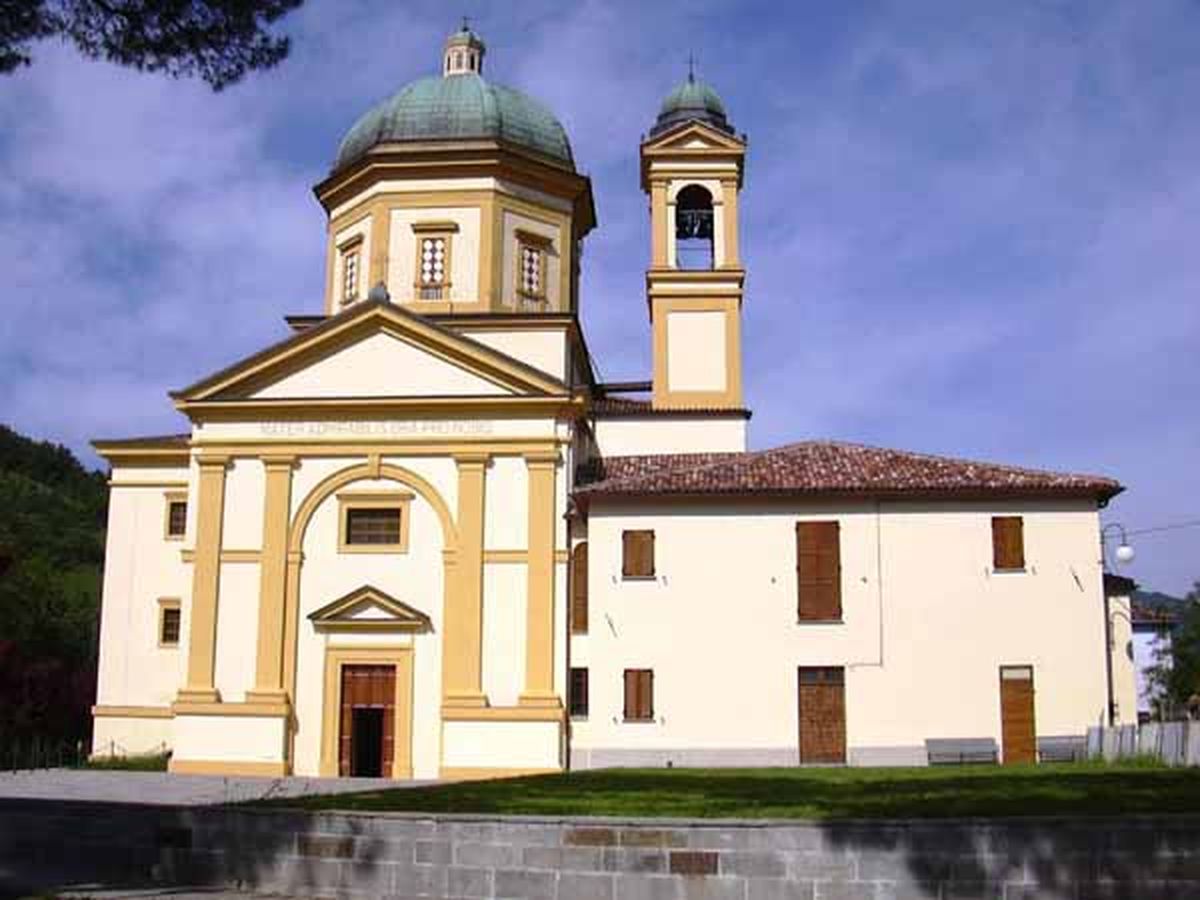
Santuario della Beata Vergine della Suasia
On the table
The cuisine of Civitella and its valleys is a sensory experience tied to the cycles of nature and the fruits of the forest.
The undisputed star is the Prugnolo mushroom, to which Cusercoli dedicates a renowned spring fair, closely followed by the prized Bidente truffle, celebrated in the fall at local festivals.
These gems of the earth are paired with sfoglia lorda and traditional Romagna first courses, accompanied by the full-bodied wines of the surrounding hills. The Morandina cherry, on the other hand, is the main ingredient in Civitella’s jam, used to fill traditional fried tortelli and Pancion, whose recipe is a closely guarded secret among the women of the village.
Nearby
A few kilometres before Civitella di Romagna, you can find Cusercoli, an ancient village. The small town rises on a spur of calcareous rock; such a peculiar location inspired the ancient name of the village referring to the Herculean labours required to carve that type of hard rock.
Along the main street, named "Purtaza", there is the ancient city gate dominated by the coat of arms of the Counts Guidi di Bagno, the only access to the town at the time when it was built. On the top there is also the ancient castle of Counts Guidi di Bagno, which has a church, a bell-tower, a few frescos, a small Italian garden, a rectory, sundials and a parish.
The Meridiana Hall of the castle houses 14 exquisite 17th-century terracotta panels depicting the Stations of the Cross.
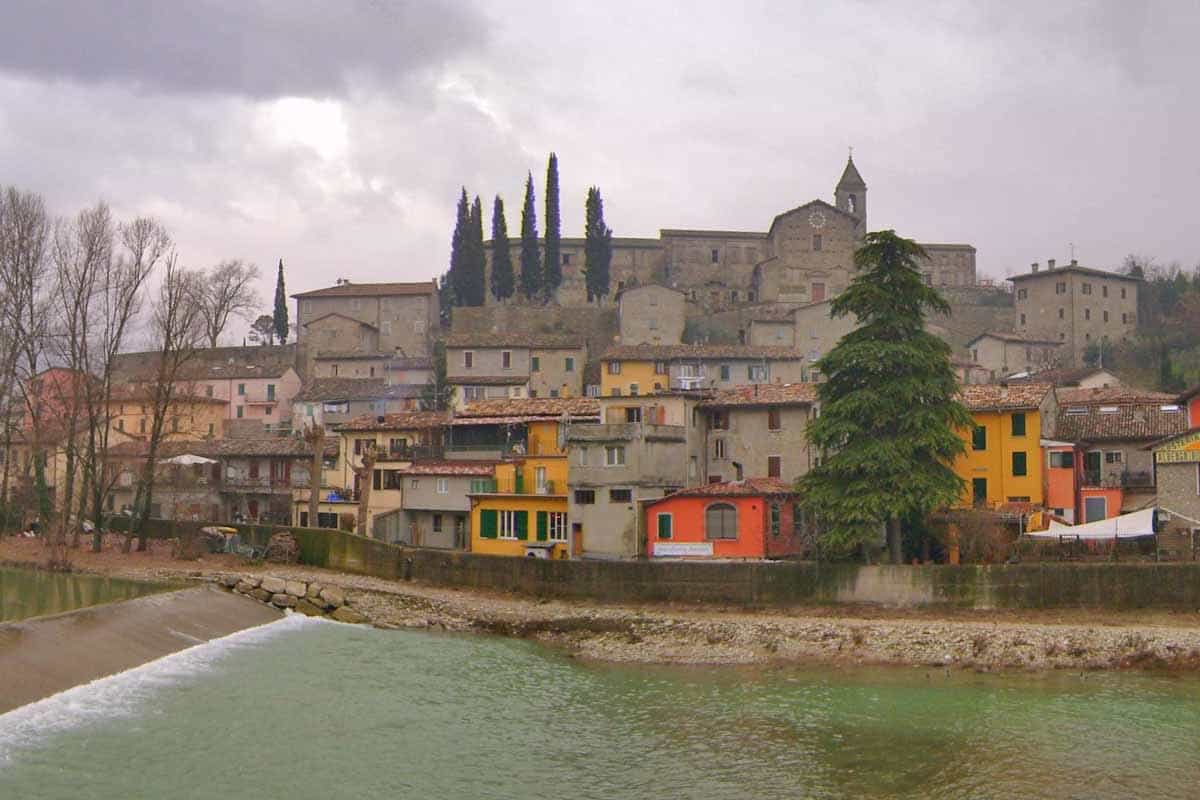
Cusercoli